

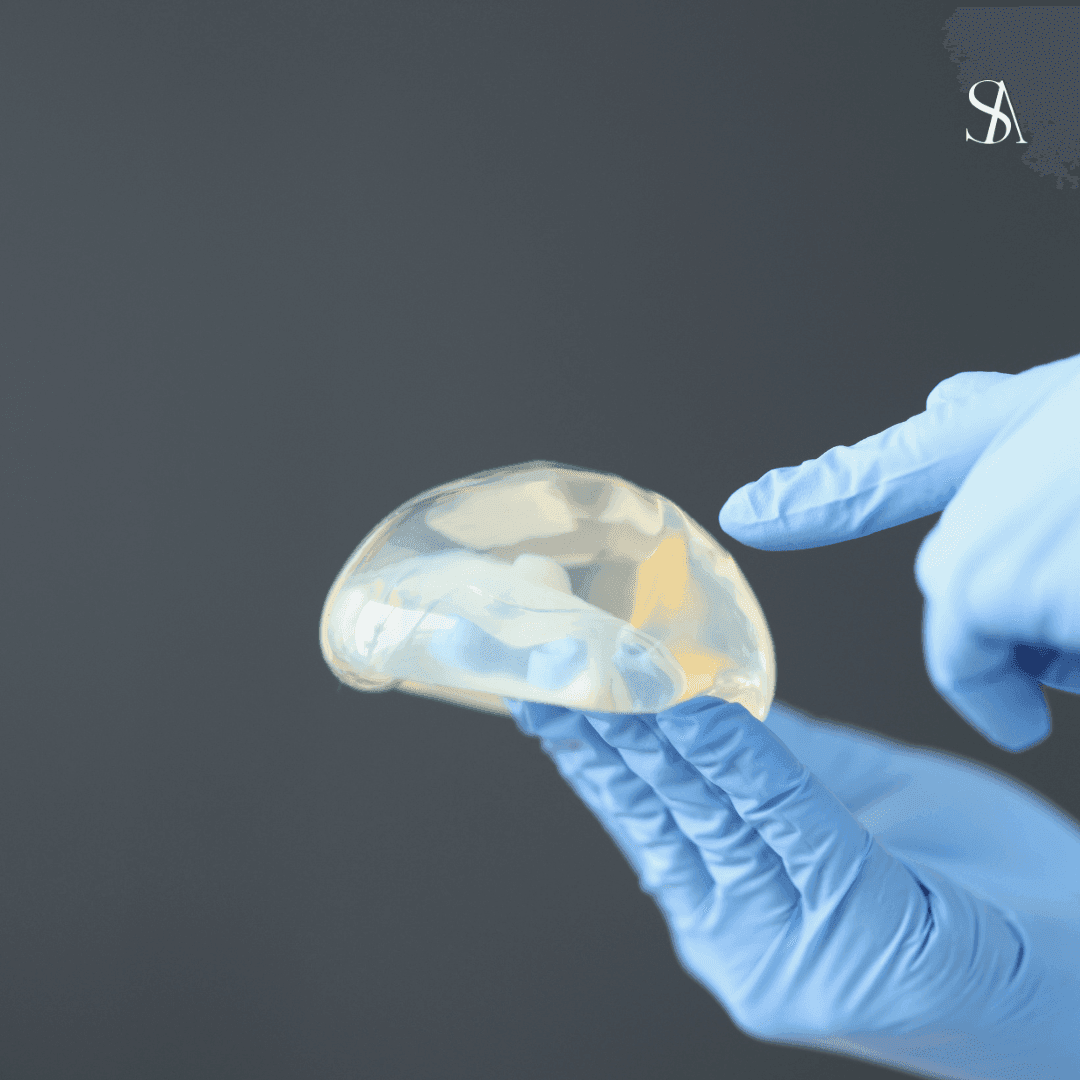
Breast augmentation remains one of the most common aesthetic surgeries in the world, yet the procedure occupies a different cultural and clinical position than it did a generation ago. In the United States alone, plastic surgeons performed more than 306,000 breast augmentation procedures in 2024, making it the second most common cosmetic surgery after liposuction. During the same period, more than 41,000 breast implant removals were also performed, a figure that would have received significantly less public attention two decades earlier (American Society of Plastic Surgeons, 2025).
The shift is not necessarily reflected in public demand. It is reflected in how patients arrive at the decision.
For many years, breast augmentation was discussed primarily through the language of enhancement. Conversations focused on size, profile, cleavage, and surgical technique. Contemporary consultations still include those considerations, but they increasingly extend beyond appearance into discussions of device longevity, revision surgery, surveillance recommendations, implant associated conditions, and alternative procedures (U.S. Food and Drug Administration, 2021).
The procedure itself has evolved incrementally, and the informational environment surrounding it has changed far more dramatically. The result is a category of aesthetic medicine that now sits at the intersection of cosmetic preference, medical device regulation, patient reported outcomes, and long term health management.
The Era of Augmentation
For much of the late 1990s and early 2000s, breast augmentation represented one of the most visible expressions of cosmetic surgery. Silicone gel implants returned to the U.S. market following FDA approval in 2006 after a period of restrictions, and demand remained consistently high throughout the following decade (U.S. Food and Drug Administration, 2021).
During this period, public conversations surrounding augmentation often emphasized aesthetic outcomes over long term device management. The discussion centered on volume, projection, and postoperative appearance. What occupied less space in public discourse was the reality that breast implants had always been medical devices with finite lifespans.
That does not mean complications were unknown. Capsular contracture, rupture, reoperation, and implant replacement had long been recognized within plastic surgery literature. What differed was their visibility within popular discourse. Patients typically encountered those discussions inside consultations rather than through social media, advocacy communities, podcasts, and mainstream news coverage.
The procedure existed within a largely aesthetic framework. The dominant question was often how an implant could alter appearance rather than how that implant would be managed over decades.
The Difference Between a Cosmetic Procedure and an Implanted Device
One of the most consequential shifts in breast augmentation has been conceptual.
Breast implants are aesthetic devices, but they are also implanted medical devices. That distinction has become increasingly central to contemporary decision making.
The FDA explicitly states that breast implants should not be considered lifetime devices and that the probability of complications increases over time. Additional surgeries may eventually be required because of rupture, capsular contracture, implant displacement, asymmetry, or aesthetic changes related to aging (U.S. Food and Drug Administration, 2021).
This places breast augmentation in a category that differs from many other aesthetic interventions. Injectable fillers gradually dissolve. Neuromodulators wear off. Energy based treatments are episodic. Breast implants remain within the body for years, sometimes decades, creating obligations that extend far beyond the recovery period.
Long term follow up data has reinforced this distinction. In one of the largest implant outcome reviews conducted to date, researchers evaluated nearly 100,000 patients enrolled in FDA post approval studies and emphasized the importance of long term surveillance, noting that many implant related complications emerge years after surgery rather than immediately afterward (Coroneos et al., 2019).
From a clinical perspective, this changes the nature of informed consent. A patient considering breast augmentation is not simply evaluating a surgical result. The patient is evaluating a future relationship with a medical device.
When Information Became Part of the Procedure
Perhaps the most significant development in modern breast augmentation did not occur in an operating room, but instead, it took place in the consent process.
In 2021, the FDA strengthened safety requirements surrounding breast implants, introducing boxed warnings and mandatory patient decision checklists intended to standardize communication of known risks before surgery (U.S. Food and Drug Administration, 2021). These materials explicitly inform patients that implants are not lifetime devices, that future surgery may be required, and that specific implant associated conditions exist.
While informed consent has always been part of surgical practice, the degree of standardization and public visibility surrounding breast implant risks represents a notable departure from previous decades.
The shift reflects a broader movement occurring throughout healthcare. Patients increasingly expect access to research literature, regulatory information, long term outcome data, and patient communities before making procedural decisions. Information that was once filtered primarily through physicians now circulates through multiple channels simultaneously.
As a result, breast augmentation consultations often begin after patients have already spent months reviewing experiences, scientific studies, and safety updates independently.
The Emergence of Breast Implant Illness as a Patient-Led Discussion
Few developments illustrate this transition more clearly than the rise of Breast Implant Illness (BII). Unlike implant rupture or capsular contracture, BII is not a formal medical diagnosis. Rather, it is a patient generated term used to describe a variety of symptoms reported by some individuals with breast implants, including fatigue, joint pain, cognitive difficulties, muscle aches, chronic inflammation, and autoimmune-like symptoms (U.S. Food and Drug Administration, 2021).
The significance of BII extends beyond the symptoms themselves. Historically, many medical discussions originated within clinical research before entering public awareness. The BII conversation largely developed in the opposite direction. Patients formed online communities, identified recurring symptom patterns, and advocated for further investigation before scientific consensus had been established. Much of the momentum behind the movement came from patients who felt their experiences were not adequately reflected in existing research.
Many women began documenting symptoms publicly, sharing timelines of symptom onset, explant surgery decisions, and recovery experiences. These narratives varied widely, but collectively they contributed to a growing perception that patient experiences should be studied rather than dismissed. The visibility of these reports helped transform what might once have remained isolated conversations into a broader public discussion. In many cases, patients were not simply seeking validation; they were seeking investigation. For many participants, the central concern was not proving that implants caused their symptoms. It was understanding whether their experiences warranted further study and whether existing clinical frameworks were adequately capturing what they were reporting.
By the late 2010s, online Breast Implant Illness communities had grown into some of the largest patient led health discussions within aesthetics. Facebook groups dedicated to BII collectively attracted tens of thousands of members, with some communities exceeding 100,000 participants. These spaces became repositories for symptom reporting, explant experiences, physician recommendations, and personal health narratives. While participation within these communities does not constitute clinical evidence, their scale demonstrated a level of patient engagement that was difficult for both researchers and regulators to dismiss.
The influence of these communities became difficult to ignore by 2019, when the U.S. Food and Drug Administration convened a public advisory committee meeting to examine breast implant safety. During the hearings, patients, physicians, researchers, and advocacy groups testified about experiences ranging from implant associated cancers to systemic symptoms commonly described as Breast Implant Illness. The meeting ultimately contributed to a series of FDA actions, including strengthened labeling requirements, boxed warnings, and the Patient Decision Checklist that became mandatory in 2021 (U.S. Food and Drug Administration, 2021).
In many ways, the hearings represented a shift in how regulatory discussions unfolded. Rather than emerging solely from published clinical data, concerns raised by patient communities became part of the process through which future data collection and safety communication priorities were established. At the same time, researchers face a significant methodological challenge when studying these reports. Many individuals entering Breast Implant Illness communities are already experiencing symptoms or actively searching for explanations, meaning the group is inherently self-selected. This makes it difficult to determine prevalence rates, establish causation, or compare outcomes to the broader population of implant recipients. The challenge is not whether the symptoms are real. The challenge is determining why they occur, which patients may be most susceptible, and whether implants function as a direct cause, contributing factor, or coincidental variable within a more complex health picture.
Researchers have approached this topic cautiously. Magnusson and colleagues argue that patient experiences warrant serious consideration while acknowledging that evidence remains insufficient to support a single unifying biological explanation connecting all reported symptoms (Magnusson et al., 2019).
The challenge lies in distinguishing patient reported observations from causal mechanisms that can be consistently demonstrated through research.
This distinction is important because the conversation is often framed as requiring a choice between acceptance and dismissal. Scientific investigation does not operate through those categories. It operates through the process of testing whether observations can be replicated, measured, and explained.
The current state of the evidence reflects ongoing investigation rather than definitive resolution.
The Rare Risks That Changed Public Awareness
While much attention has focused on patient reported symptoms, other developments emerged through regulatory surveillance and clinical research.
One of the most consequential has been Breast Implant Associated Anaplastic Large Cell Lymphoma (BIA-ALCL), a rare cancer of the immune system that develops within the scar capsule surrounding an implant rather than within breast tissue itself (Cordeiro et al., 2020).
Research has demonstrated a stronger association between BIA-ALCL and textured implants than with smooth surface implants, leading to significant regulatory scrutiny and changes in clinical practice (Cordeiro et al., 2020; U.S. Food and Drug Administration, 2021). The strongest regulatory response occurred in 2019 when Allergan voluntarily recalled its BIOCELL textured breast implants and tissue expanders at the request of the FDA. At the time, the FDA reported that a substantial majority of known global BIA-ALCL cases were associated with Allergan’s textured devices. The recall became one of the most visible examples of how long term surveillance data can alter clinical practice years after a product has entered the market (U.S. Food and Drug Administration, 2019).
Although BIA-ALCL remains rare, its impact on breast augmentation extends far beyond the number of reported cases. Research by Peter Cordeiro and colleagues suggests that its discovery fundamentally changed how clinicians discuss implants, shifting conversations that once focused primarily on aesthetic outcomes toward broader considerations of patient safety, surveillance, long-term device management, and epidemiology (Cordeiro et al., 2020).
In this sense, the significance of BIA-ALCL lies not only in the condition itself, but in how it reshaped the framework through which risks associated with breast implants are communicated and understood. Prior to widespread awareness of BIA-ALCL, conversations surrounding augmentation commonly emphasized cosmetic outcomes and surgical recovery. Following its recognition, discussions increasingly incorporated device specific risks, surveillance recommendations, pathology, and long term monitoring. This caused the conversation to expand from aesthetics into epidemiology.
Satisfaction and Risk Are Not Opposites
One of the challenges in discussing breast implants is the tendency toward binary narratives. Public conversations often oscillate between two positions: either implants are overwhelmingly successful or fundamentally problematic. The evidence supports neither interpretation.
Research utilizing validated outcome measures such as BREAST-Q has repeatedly demonstrated high levels of patient satisfaction following augmentation. Studies report significant improvements in body image, psychosocial well-being, sexual well-being, and satisfaction with breast appearance among augmentation patients (Alderman et al., 2017).
At the same time, long term follow up studies consistently demonstrate that revision procedures, complications, and device related concerns remain meaningful parts of the clinical landscape (Coroneos et al., 2019).
These findings are not contradictory because a procedure can produce high satisfaction rates while also requiring thoughtful discussion of future risks, maintenance requirements, surveillance, and the possibility of revision surgery. Understanding both realities simultaneously may provide the most accurate representation of contemporary breast augmentation.
The Expansion of Alternatives
Another difference between breast augmentation today and breast augmentation twenty years ago is the number of available alternatives. Historically, many consultations centered on implant selection. Contemporary patients frequently evaluate multiple pathways toward a similar aesthetic goal. These may include silicone implants, saline implants, fat transfer augmentation, hybrid augmentation combining implants and fat grafting, mastopexy, or combinations of these approaches (International Society of Aesthetic Plastic Surgery, 2025).
The increase in options changes the nature of the decision. Rather than asking how to achieve a particular size, patients increasingly evaluate how different procedures interact with anatomy, aging, maintenance requirements, revision potential, and long term goals.
This shift is reflected in procedural statistics. While breast augmentation remains highly popular, more than 153,000 breast lift procedures were performed in 2024, suggesting growing interest in proportion, positioning, and anatomical balance independent of implant placement (American Society of Plastic Surgeons, 2025).
Meanwhile, broader aesthetic trends have shifted toward customization rather than standardization. In many contemporary consultations, the discussion centers less on maximizing volume and more on achieving outcomes that remain harmonious as the body changes over time.
The New Framework
The most significant change in breast augmentation may not be technological. Modern implants are refinements of existing technologies. Surgical techniques continue to advance. Alternative procedures continue to expand.
What has changed most dramatically is the framework through which the procedure is understood. A contemporary patient evaluating breast augmentation is likely considering aesthetic goals alongside surveillance recommendations, revision rates, regulatory guidance, implant associated conditions, alternative procedures, and long term management. That is a fundamentally different informational environment than the one that surrounded the implant boom years.
Breast augmentation remains one of the most commonly performed aesthetic procedures in the world. What has changed most significantly is not the procedure itself, but the amount of information surrounding it. Twenty years ago, patients were largely deciding whether they wanted implants. Today, many patients are deciding how to evaluate competing forms of information, including clinical research, regulatory guidance, physician recommendations, online communities, personal testimonials, and long-term safety data. The procedure increasingly exists within an environment where information has become part of the intervention itself. Understanding breast augmentation now requires more than understanding implants. It requires understanding how patients, researchers, physicians, and regulators collectively shape what those implants come to mean.