

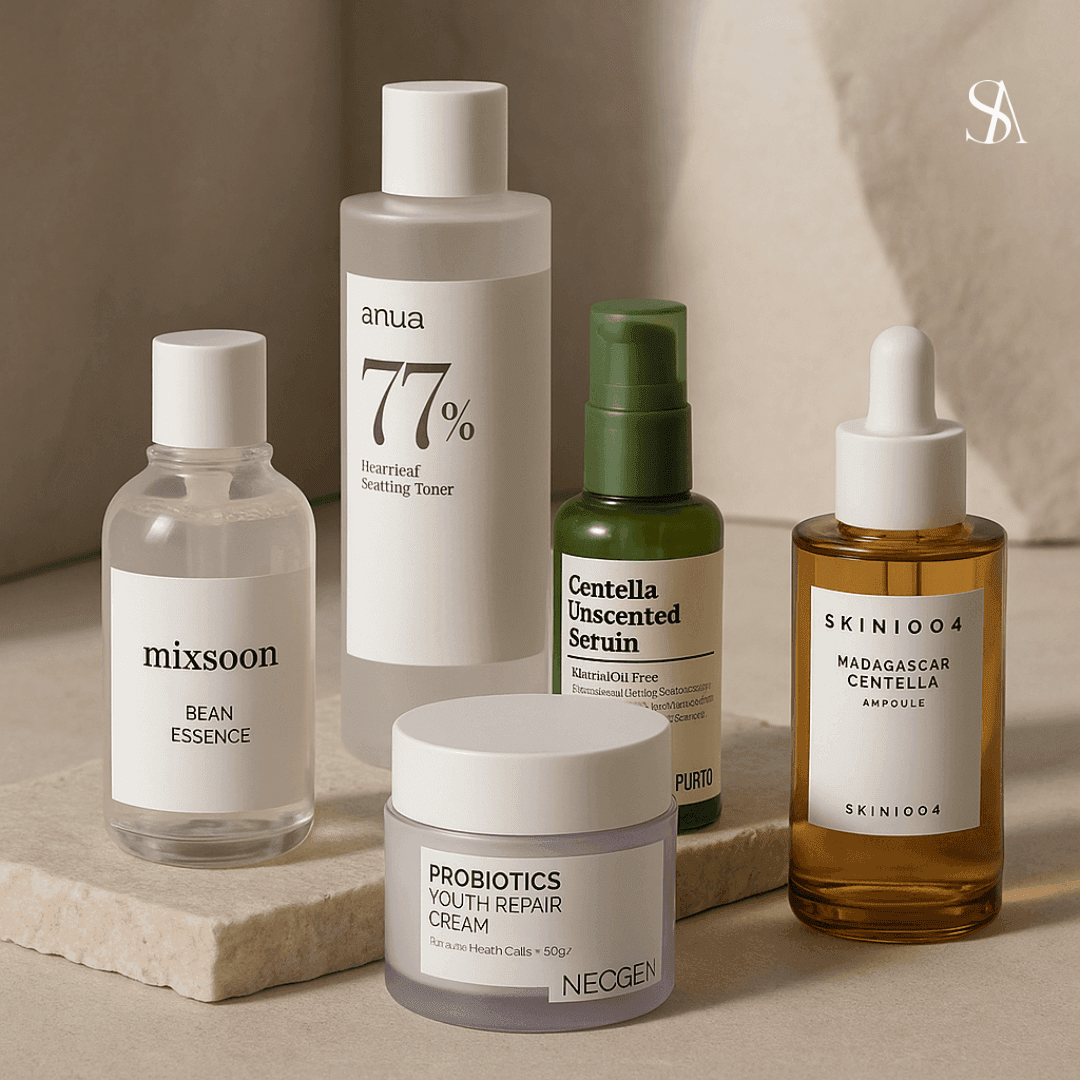
Over a decade after it first captured the West with BB creams and 10-step routines, Korean beauty is experiencing what many are calling a second wave. But this time, there are no snail memes or gimmicky sheet masks. Instead, we’re seeing fermentation labs, DNA-based actives, and brands touting soil purity and microbiome balance.
But the question remains: Is this evolution of K-Beauty as groundbreaking as it seems — or is it a more refined expression of what the industry has always done best: marketing innovation disguised as skincare revolution?
To answer that, we need to look deeper — into the science, the cultural context, and the quiet emergence of niche Korean brands that are setting a new tone in the industry.
The Cultural Constant: Prevention Over Correction
Korean skincare culture has always diverged from the Western model. Where many U.S. consumers treat skincare as damage control, Korean consumers — thanks in part to a robust culture of dermatological access and aesthetic maintenance — prioritize prevention. That cultural backdrop hasn’t changed. What has changed is how it’s now being exported.
Today’s brands don’t just reference tradition; they lean heavily into ingredient origin stories, fermentation technology, and clinical positioning. And while many of these developments are rooted in legitimate science, they also beg the question: how much of this is innovation, and how much is rebranding old wisdom with new language?
Brand Spotlight: When Boutique Means Biotech
Several emerging brands reflect this new era with more transparency and technical rigor:
• mixsoon, which focuses on fermented, single-ingredient skincare, grows its Centella asiatica on pesticide-free land — a fact often mentioned in marketing, but difficult to contextualize without broader soil quality data. Still, their control over fermentation and minimal formulations give them credibility in a space crowded with filler.
• Neogen and Numbuzin offer enzyme peels and probiotic serums with a clear emphasis on ingredient absorption and skin-barrier safety. While the science behind fermented lysates (e.g. galactomyces, bifida) is promising, published data remains limited in scope and often derived from in-house or industry-funded studies.
• Purito, Anua, and SKIN1004 emphasize ingredient sourcing — particularly heartleaf and centella extracts from specific Korean regions. Traceability is commendable, but the leap from “grown on Jeju Island” to “clinically superior” often lacks independent validation.
The Science: Functional — But Not Always Game-Changing
Let’s be clear: the technologies behind this K-Beauty renaissance are not marketing fluff. Fermentation can increase bioavailability, reduce irritation, and even generate novel postbiotic compounds. Probiotics, peptides, and DNA fragments (like PDRN) have shown regenerative potential in both dermatology and wound healing. However, many of these ingredients are not unique to Korea, nor are they new.
What’s notable is how Korean brands are integrating these actives into accessible, non-medical skincare at scale. It’s less about inventing new science and more about democratizing lab-driven formulas without the clinical price tag. That shift is meaningful — but it’s not revolutionary.
Furthermore, despite the industry’s reliance on terms like “microbiome-safe,” “DNA-repairing,” or “biotech skincare,” third-party peer-reviewed research on these claims remains sparse, and consumer results often vary depending on skin type and environment.
Objectively Speaking: What Makes This Second Wave Different?
What’s real:
• A genuine rise in formulation quality, with an emphasis on skin-barrier compatibility, low-irritation actives, and ingredient integrity.
• Increasing transparency in sourcing and manufacturing — some brands now share farm origins, extraction methods, and fermentation processes.
• A market correction against over-exfoliation and overuse of aggressive actives, particularly in Western routines.
What’s overhyped:
• The idea that K-Beauty owns fermentation or microbiome tech. Many of these innovations have been explored in European and Japanese skincare for decades.
• The belief that ingredient origin alone guarantees performance. “Jeju-grown” or “Madagascar wild-harvested” sounds good, but efficacy is ultimately determined by formulation, stability, and skin compatibility.
• The assumption that “gentle” is always better. While barrier support is essential, not all skin needs minimalist routines — and complex conditions often require more targeted (and evidence-backed) interventions.
The Global Relevance: What Can Western Skincare Learn?
If there’s one thing the second wave of K-Beauty teaches us, it’s the value of cumulative care. These brands champion skin as an ecosystem — not something to scrub, peel, or control, but to feed, support, and fortify. That message resonates deeply as U.S. consumers push back against harsh actives, product fatigue, and confusing regimens.
At the same time, K-Beauty’s strength has always been its ability to adapt. Today, that means leaning into biotech language, wellness narratives, and clinical credibility. Whether that translates to better skin outcomes or just smarter packaging remains a case-by-case discussion.
Bottom Line: Reset, Not Revolution
The second wave of K-Beauty is not a revolution — it’s a reset. A reframing of long-standing cultural values and formulation techniques through the lens of modern skin science. It’s a movement defined more by restraint than disruption.
And maybe that’s exactly what the industry needs.
What’s Next: Where K-Beauty Could Truly Innovate
While today’s second wave is more refinement than revolution, several emerging directions hint at where K-Beauty could break new ground — not just in formulation, but in how skincare is conceptualized and delivered:
- Personalized Diagnostics at Scale
Korea already leads in consumer-facing skin diagnostics through devices like skin sensors and in-clinic analysis. The next evolution may lie in AI-driven, at-home diagnostics that prescribe skincare based on real-time barrier status, hydration levels, or even microbiome mapping. A few startups are already exploring this space, but large-scale consumer rollout remains nascent.
- Prescription-Strength Functional Skincare
With growing interest in PDRN, growth factors, and exosome-like compounds, Korean brands may eventually bridge over-the-counter skincare with medically-adjacent actives — offering results that border on dermatological treatments, without requiring a clinical setting. The challenge will be regulation, safety, and consumer education.
- Postbiotic Delivery Systems
Most probiotic claims in skincare remain surface-level. What could change the game is targeted postbiotic delivery — encapsulated metabolites or microbiome-trained peptides designed to regulate inflammation, pigmentation, or aging with pharmaceutical precision.
- Sustainable Biomanufacturing
Ingredient traceability is a strong suit, but biotech fermentation and vertical farming could allow brands to scale rare actives (e.g. wild mugwort, rare ginseng species) without overharvesting or ecological strain — bringing true sustainability to formulation, not just packaging.
- Hybrid Skin Clinics & Retail
Korea already blends dermatology and consumer retail with ease. The next leap may be smart clinics — integrated spaces where skin readings, AI formulations, and on-demand facials using fresh, bioactivated ingredients converge. Think: a Sephora-meets-skin-lab powered by real diagnostics, not trend algorithms.
As the global skincare landscape becomes more crowded — and more educated — K-Beauty’s true potential may lie not in its past successes, but in how boldly it embraces biology, biotechnology, and systems thinking for the skin.
The second wave may be a reset. But the third? That’s where the real revolution could begin.