

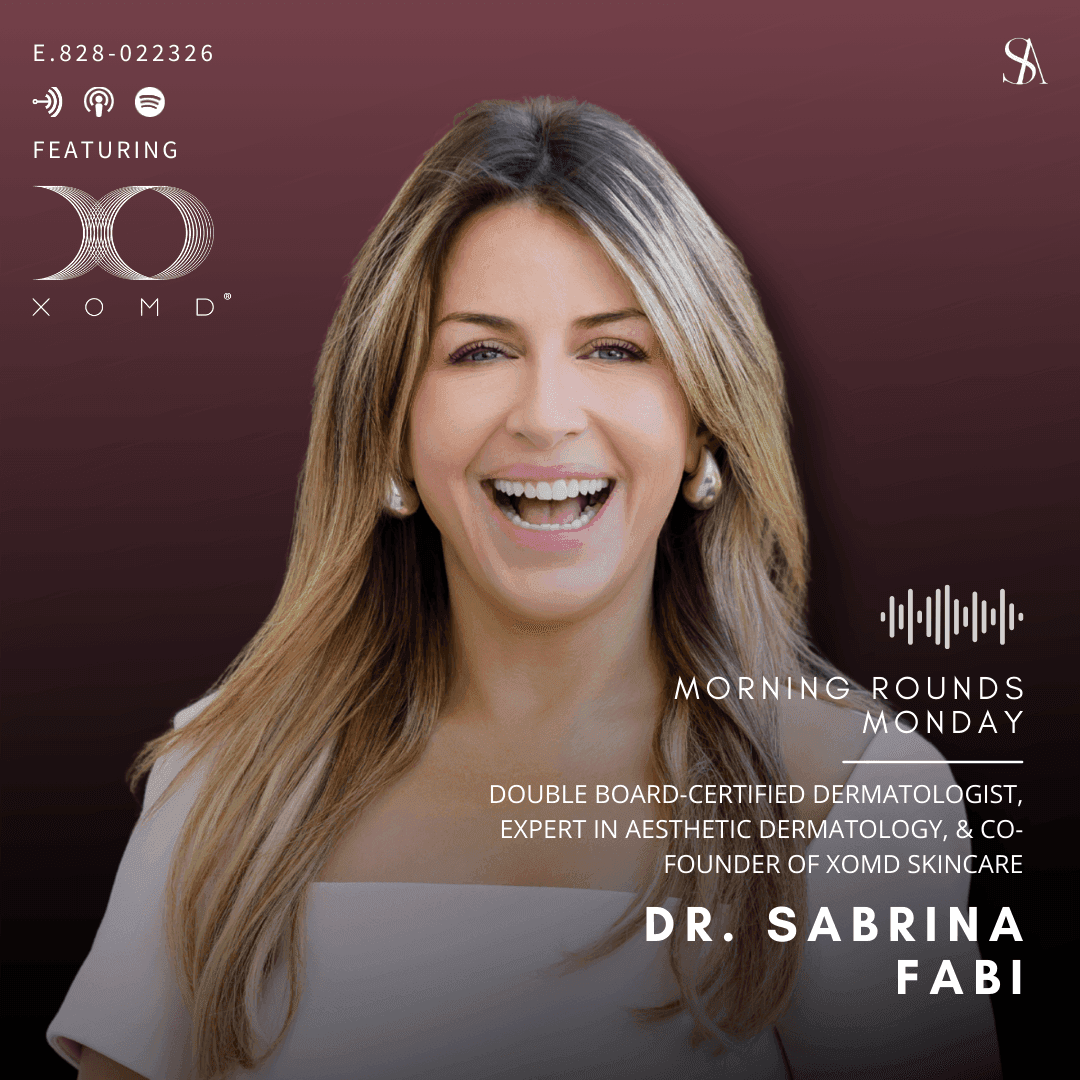
In this episode of Skin Anarchy, Dr. Ekta Yadav sits down with double board-certified dermatologist Dr. Sabrina Fabi to explore a topic that remains deeply under-discussed despite affecting half the population: the intersection of perimenopause, menopause, and skin health.
What unfolds is not just a conversation about dryness or wrinkles — but about biology, hormones, mood, confidence, and how aesthetic medicine must evolve to meet women where they are.
Dermatology as a Calling
For Dr. Fabi, medicine was never just a career — it was a calling. Inspired early by her own struggles with eczema and acne, she saw firsthand how profoundly skin conditions shape identity and confidence. Dermatology became the path through which she could help people feel more secure navigating the world.
After training in Chicago and completing a cosmetic dermatology fellowship during the early days of aesthetic medicine, she gravitated toward lasers and procedural dermatology. The appeal was simple: measurable outcomes. Unlike chronic conditions that are managed indefinitely, energy-based devices often provide visible, satisfying change.
But today, the conversation has expanded far beyond lasers and neuromodulators.
When Aesthetic Medicine Is Treated Too Casually
One of the most candid moments of the episode centers on the hyper-casual way aesthetic procedures are now approached.
Botox, filler, lasers — once carefully considered medical interventions — are now often treated like mall purchases or flash sales. Dr. Fabi emphasizes a critical reminder: aesthetic treatments are still the practice of medicine. Anatomy, ethnicity, bone structure, and long-term treatment planning matter.
She cautions against two common trends:
- Choosing the most convenient or lowest-downtime procedure rather than the most appropriate one.
- “Provider hopping” instead of building a long-term relationship with a qualified practitioner.
Longevity in aesthetics, she argues, requires consistency and thoughtful assessment — not impulsivity.
The Silent Shift: Understanding Perimenopause
The heart of the episode focuses on perimenopause — the four-to-eight-year hormonal transition leading up to menopause that many women do not recognize.
Menopause is officially defined as 12 consecutive months without a period. But perimenopause precedes that milestone and is often marked by fluctuating hormones that are difficult to measure reliably.
One of the first hormones to decline is progesterone — not estrogen, which often receives the spotlight.
As progesterone drops, women frequently experience:
- Dryness (often the earliest skin symptom)
- Dullness
- Increased sensitivity
- Slower recovery from procedures
Later, estrogen decline contributes more significantly to fine lines and wrinkles. Testosterone shifts can accelerate muscle loss, contributing to changes in facial structure and metabolic rate.
These hormonal changes do not live in isolation. Skin, mood, sleep, metabolism, and cognition are all interconnected.
The Psychological Impact of Hormonal Aging
Dr. Fabi references a global survey of 4,300 women across nine countries examining menopause knowledge and symptoms. The findings were striking:
- The number one concern among perimenopausal women was dryness.
- The top emotional response was feeling less attractive.
- This was followed by low mood, anxiety, and reduced confidence.
These shifts are not superficial. Hormones influence receptors throughout the body — including the brain. When they change, perception changes.
And yet, most women are never formally educated about this life stage.
The Estrogen Cream Misconception
Another powerful discussion centers on the widespread trend of topical estrogen use. While estrogen can be beneficial for some women, it is not universally appropriate.
Hormonal balance is about ratios — not simply adding more of one hormone. In perimenopause, estrogen levels may still be high while progesterone declines. Adding topical estrogen indiscriminately can oversaturate receptors and potentially worsen redness or inflammation.
Dr. Fabi stresses the importance of individualized assessment rather than trend-driven self-treatment.
Introducing XOMD: Beyond Estrogen
As co-founder of XOMD, Dr. Fabi brings a different lens to hormone-informed skincare.
XOMD was born from the understanding that skin and brain share a common embryologic origin — the ectoderm. This connection opens the door to exploring neuropeptides and hormonal signaling pathways that influence not only appearance but emotional state.
One hormone of particular interest is oxytocin.
Often called the “bonding hormone,” oxytocin levels decline with menopause. Emerging research has suggested a possible correlation between higher serum oxytocin levels and more youthful-appearing skin. This insight sparked further investigation into whether skin-level receptor activation could potentially influence local and systemic signaling pathways.
While traditionally oxytocin delivery has been limited to intranasal forms, XOMD explores ways to leverage skin receptors to stimulate intrinsic pathways rather than simply layering hormones externally.
Longevity Requires Context
A recurring theme throughout the episode is restraint.
Not every peptide is necessary. Not every injectable is appropriate. Not every trending biohack improves health.
The goal is not maximal intervention — it is intelligent optimization.
Hormones, receptors, metabolism, muscle mass, collagen production — these systems are deeply interconnected. Effective aesthetic medicine must respect that complexity rather than oversimplify it.
A New Framework for Women’s Skin Health
What this conversation ultimately underscores is that perimenopause and menopause are not cosmetic inconveniences — they are biologic transitions requiring education, nuance, and support.
Dryness may precede wrinkles. Mood shifts may precede hot flashes. Confidence may shift before the mirror reveals obvious change.
And aesthetic medicine, when practiced responsibly, can play a meaningful role in helping women navigate that transition — not by erasing age, but by supporting resilience.
Listen to the full episode of Skin Anarchy to hear Dr. Sabrina Fabi share her insights on perimenopause, hormonal skin shifts, aesthetic decision-making, and the science behind XOMD.