

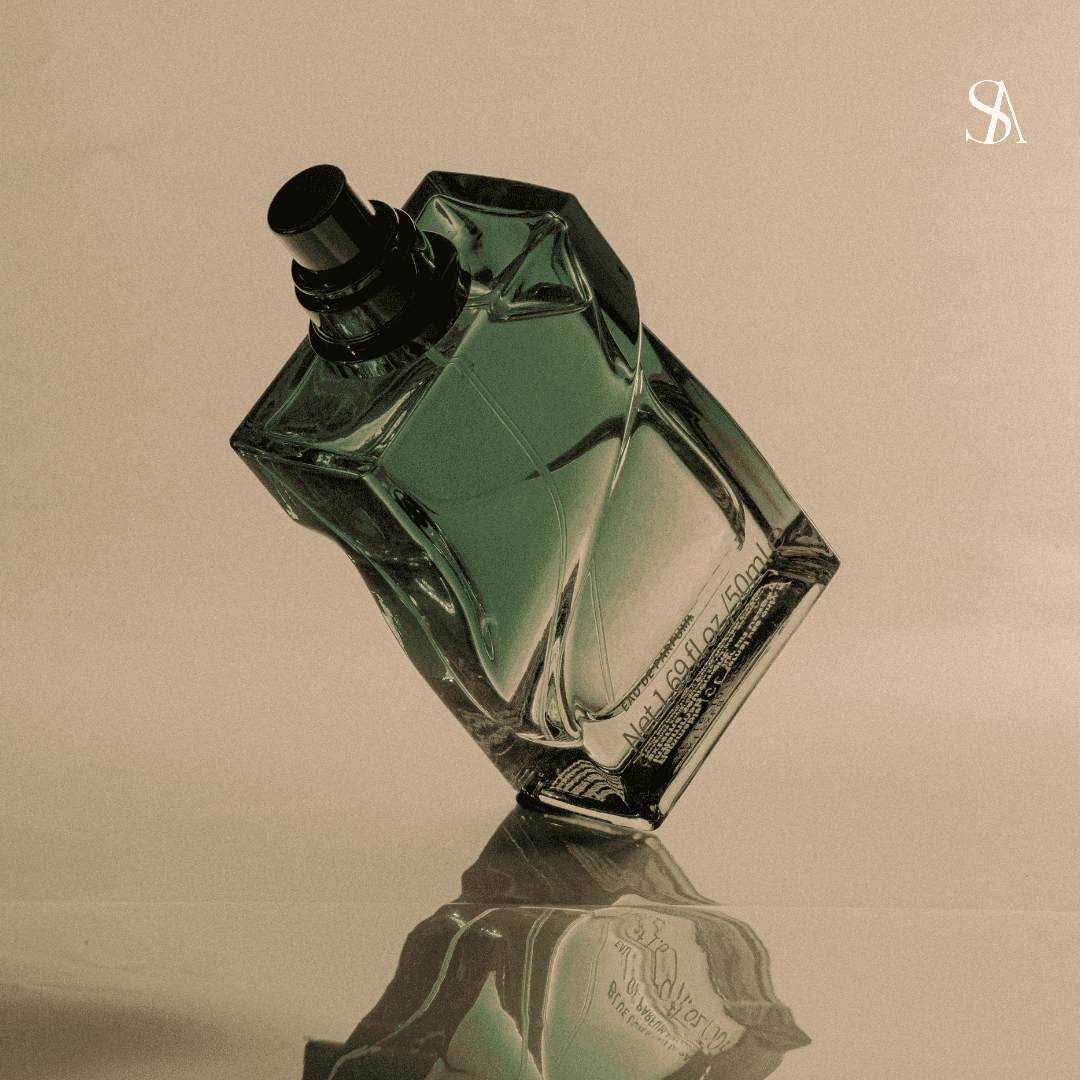
Luxury perfume pricing isn’t just about “the juice in the bottle.” When buying a luxury fragrance, you’re paying for rare or hard-to-extract ingredients, months of development and aging, strict safety compliance, beautiful packaging, global marketing, and retail markups. According to Financial Times, new technology, from AI “co-pilot” tools to carbon-captured alcohol and upcycled ingredients, is changing how fine fragrance is made and improving environmental friendliness, but overall, man-powered, skilled craftsmanship still drives the experience.
From Plant to Bottle: The Classic Build of a Fine Fragrance
Step 1: Sourcing & extraction. Perfumers start with naturals (flowers, woods, resins, citrus peels) and/or lab-made aroma molecules. Naturals are taken from a pure state and turned into perfumery ingredients through methods such as:
- Steam distillation, particularly will lavender and citrus peels like orange and lemon
- Solvent extraction, to make concrete, a waxy, semi-solid mass ridded of solvents, and absolutes, an even further separated compound made up of strictly fragrant oils, leaving the waxes separate. Solvent extraction occurs most commonly when working with delicate flowers like jasmin.
- Supercritical CO₂ extraction, which is a green, low-heat, and solvent-free extraction technique that used carbon dioxide in a supercritical state to selectively extract compounds from plant material only capturing the needed scents for a fragrance recipe (low-heat, solvent-free; often truer to the living scent).
- Enfleurage, a historical and timeless fat-washing of petals; a fatty substance, like butter, is submerged in flower petals and to sit, thus absorbing the scent of the petals
- GC-MS: Modern perfumery can “photograph” a living flower or place by sampling the air around it, then analyzing the volatile molecules via gas chromatography–mass spectrometry (GC-MS). This lets perfumers re-create scents that can’t be distilled (like lily of the valley) with remarkable realism.
Step 2 — Mixing and Leveling: the actual making of perfumes is a delicate and complex process. Many small steps are taken to produce the perfectly stable, balanced, and delightful scents.
- Blending, maceration and aging: According Perfumeson.com, A fine fragrance is blended from dozens to hundreds of materials, then macerated (rested) so the formula knits together. Maceration and aging can run weeks to months depending on the composition.
- Dilution & concentration. The concentrate (the “juice”) is diluted in cosmetic-grade alcohol to a target strength:
- Extrait/Parfum: ~20–40% oils
- Eau de Parfum (EDP): ~15–20%
- Eau de Toilette (EDT): ~5–15%
- More oil usually means a richer, longer-lasting (and pricier) scent.
Step 3 — Safety & compliance: Formulas must comply with IFRA Standards, an industry risk-management system that sets limits, restrictions, or bans on specific ingredients for safe use. Brands certify compliance across product categories.
Luxury Economics: “Why Are Luxury Perfumes So Expensive?”
1. Raw materials can be eye-wateringly costly. Some naturals require massive harvests or years of prep:
- Orris (iris) butter needs years of aging and yields are tiny as one ton of dried rhizome powder can give only about 2 kg of butter, explaining its “worth its weight in gold” reputation.
- Oud (agarwood) from aged, resinous trees can sell for thousands per ounce; artisanal distillations command five- to six-figure per-kilogram prices.
- Global reporting has tracked overall price inflation in niche and luxury fragrance due to rare materials, climate impacts on crops, and broader economic pressures.
2. Craftsmanship, time, and testing. Developing a luxury scent can involve many formula iterations, stability/allergen testing, weeks-to-months of maceration, then quality control at scale.
3. Packaging & presentation. Custom glass, magnetic caps, heavy boxes, or even crystal flacons push costs up — and are intentionally used to signal luxury.
4. Marketing, storytelling & retail. Launch campaigns, ambassadors, in-store build-outs, and retailer margins stack on top of the ex-factory cost. A worked example shows how a $100 retail bottle might include ~$28 in combined manufacturing, packaging, marketing, and distribution before retailer markup and tax. This process alone is its own art form.
Bottom line: Many luxury prices reflect scarcity + craft + brand storytelling — not simply “juice cost.”
Is the Price Worth It?
It depends on what you value:
- Scent experience & artistry: If you thrill at complex naturals (real iris, refined oud) and meticulous maturation, the result can be uniquely beautiful — and more personal than fashion items at the same price.
- Longevity & concentration: Higher-oil extraits can last longer and feel deeper on skin — if you enjoy richer wear, the premium may feel justified.
- Brand/packaging prestige: If you don’t care about sculptural bottles, you can find niche or indie houses using simpler packaging to channel more budget into the formula. (Industry coverage shows a wide spread of strategies — some invest in crystal flacons; others keep it minimal.)
Tip: Sample first. If you love how it wears on your skin and the story matters to you, the premium may be “worth it.” If not, the same perfumer’s style often exists in a more affordable concentration or line.
What’s New in Perfumery Right Now?
- AI as a perfumer’s co-pilot → Leading fragrance houses use AI tools to analyze huge ingredient libraries, suggest novel pairings, or speed up early “sketches.” Givaudan’s Carto and Symrise/IBM’s Philyra are notable examples — both assist humans rather than replace them.
- Upcycling & greener palettes → Suppliers increasingly upcycle side-streams (e.g., apple pulp, spent rose) into exclusive notes, reducing waste while creating new textures.
- Carbon-captured alcohol → Coty pioneered alcohol made from recycled industrial emissions, which even appeared in a Gucci fine fragrance — proof that sustainability moves are hitting luxury tiers.
- Advanced analysis & headspace → Headspace + GC-MS tech keeps expanding “photorealistic” florals and place-based scents without harming rare plants.
- Industry consolidation & biotech → The DSM-Firmenich merger signals deeper investment in biotech aroma ingredients (e.g., sustainable sandalwood alternatives), aiming for consistency with less ecological strain.
Pro-tips: How to Read a Label (Fast)
- Concentration → (Parfum/EDP/EDT) hints at richness and price.
- IFRA compliance → signals adherence to global safety limits. Some brands publish IFRA certificates on request.
- Story & sourcing → Look for mention of specific naturals (e.g., orris, real oud) or sustainability claims (upcycled/biotech/carbon-captured alcohol) and check the brand’s site or press notes for details.
Quick FAQ
Q: Does higher price always mean better smell?
A: No. It often correlates with rarer materials and artistry, but “better” is subjective. Try before you buy.
Q: Are naturals always superior to synthetics?
A: Not necessarily. Many beloved notes (muguet/lily of the valley) don’t yield oil and are re-created with molecules; synthetics also boost sustainability and consistency.
Q: How long should a good perfume rest before sale?
A: Many houses macerate/age for weeks to months for smoothness and longevity.