

When I began studying the cellular mechanisms of aging, I expected to find answers in telomeres, mitochondria, and metabolic pathways. What I didn’t anticipate was how profoundly menopause would emerge as one of the most critical, and misunderstood, inflection points in human longevity.
We tend to think of menopause as an ending: the conclusion of reproductive years, the loss of estrogen, the beginning of “aging.” But this framing misses something fundamental. Menopause isn’t a decline. It’s recalibration, and marks a complete metabolic reprogramming that shifts how your body allocates resources, maintains cellular integrity, and prioritizes repair.
And nowhere is this transition more visible than in your hair.
The Metabolic Turning Point We’re Not Discussing
Think of your body before menopause as an orchestra conducted by estrogen. This hormone doesn’t just regulate reproduction, it orchestrates mitochondrial efficiency, antioxidant capacity, protein synthesis, and tissue repair across multiple systems. Estrogen receptors populate not just reproductive organs but hair follicles, skin cells, bone tissue, and blood vessels. It’s a master regulator of cellular homeostasis.
When estrogen withdraws, the body faces what I call the second signal: a fundamental reprogramming of resource allocation. The energy and molecular building blocks that once supported reproductive function must now be redirected. But this transition isn’t seamless. The sudden loss of estrogen-mediated signaling creates a period of molecular confusion, a redox imbalance that accelerates the degradation of structural proteins like collagen I and III, keratin 17, and elastin.
This is the same inflection point that determines your long-term resilience. This happens not just in hair and skin, but in metabolic health, bone density, and cardiovascular function. The question isn’t whether menopause changes you, it’s whether you have the tools to guide that change.
From Optimization to Adaptation: A Critical Shift
Here’s what I find most compelling about the menopausal transition: it forces a biological shift that younger bodies never have to make.
For decades, your body has operated in optimization mode. Every system was calibrated for peak performance under stable hormonal conditions. Energy pathways were predictable. Nutrient utilization followed established patterns. Your cells knew exactly how to process zinc, synthesize collagen, and regenerate keratin because the hormonal signals were constant.
But menopause disrupts that stability. Suddenly, your biology must shift from optimization to adaptation. And these are fundamentally different metabolic states.
Optimization works when conditions are stable. You fine-tune existing pathways for maximum efficiency. But adaptation requires flexibility and the ability to maintain function when the rules change. It’s the difference between running a well-oiled machine and learning to navigate unfamiliar terrain.
Most bodies struggle with this shift because they’ve never had to make it before. The decline we associate with menopause isn’t inevitable, it’s what happens when an optimization-oriented system encounters adaptive demands without the right support.
Turning that decline into a smooth transition requires teaching your body a new skill: how to utilize cofactors and nutrients in an entirely different capacity. Not just absorbing them, but deploying them strategically to maintain function in a low-estrogen environment. This is adaptive biology, and it doesn’t happen automatically.
When Cofactors Must Learn New Jobs
Here’s what most discussions of menopausal hair loss miss: this isn’t simply about losing estrogen, but rather about losing the entire regulatory network that estrogen maintained…and then asking your cellular machinery to figure out how to function without it.
Estrogen receptors in hair follicles regulate stem cell cycling and angiogenesis (the formation of new blood vessels that nourish each follicle). When these receptors lose their primary ligand, follicular stem cells become sluggish. Growth phases shorten. The follicle miniaturizes.
But there’s a deeper layer. Estrogen also regulates how your body utilizes essential cofactors: zinc for protein synthesis, selenium for antioxidant defense, biotin for keratin production. As estrogen-driven transcription factors wane, the cellular machinery that processes these nutrients loses efficiency.
Here’s the critical insight: your cells must now learn to use these same nutrients through alternative pathways.
Before menopause, zinc utilization in hair follicles was largely estrogen-dependent. The hormone directed zinc to specific metalloproteins involved in keratin synthesis. After menopause, zinc must find new routes, perhaps through insulin-like growth factor pathways or different transcription factors. However it is important too note that this adaptive rerouting doesn’t happen efficiently without support.
The same cofactors that once maintained hair growth under hormonal guidance must now maintain it through metabolic creativity. This requires:
- Higher bioavailability of nutrients, since alternative pathways are often less efficient
- Synergistic combinations that support multiple backup routes simultaneously
- Reduced inflammatory noise so cells can “hear” the quieter signals from alternative pathways
This creates oxidative stress loops when adaptation fails. High cortisol (often elevated during perimenopause) combined with low estrogen and reduced glutathione production triggers chronic micro-inflammation in the follicular environment. Keratin proteins begin to cross-link incorrectly. Hair becomes brittle. The follicle’s own microenvironment turns hostile to growth.
I’ve come to think of this as cofactor collapse syndrome, and it affects the entire hair-skin axis. This is why menopause doesn’t just thin your hair; it changes your skin texture, nail strength, and even wound healing. These aren’t separate problems. They’re manifestations of the same underlying failure to adapt.
Hair Follicles as Sentinel Organs
One of the most fascinating aspects of hair biology is that follicles operate as mini organs with their own circadian rhythms and hormonal clocks. They cycle through growth, regression, and rest phases with remarkable precision (when the signaling is clear).
As estrogen declines, signal noise increases. The synchronization that once coordinated follicular cycling begins to falter. Some follicles enter rest phase prematurely. Others stay there too long. The coherent pattern dissolves into chaos.
This loss of keratin signaling mirrors a broader loss of inter-tissue coherence. Your skin, nails, and hair age together because they’re all epithelial tissues responding to the same systemic signals. Maintaining follicular health isn’t just about aesthetics — it’s about maintaining bioelectric coherence across your body’s barrier tissues.
In longevity science, we’re learning that these peripheral signals matter more than we thought. The health of your “edge organs” — skin, hair, the gut lining — reflects the efficiency of your cellular communication networks. When follicular signaling degrades, it may indicate that deeper systems are also losing coherence.
What we’re really witnessing is whether your body can adapt to operating without its primary conductor. Can the orchestra continue playing when the conductor leaves? Yes — but only if the musicians learn to communicate differently with each other.
Teaching Your Biology to Adapt: Metabolic Scaffolding
This is where the conversation shifts from understanding mechanisms to implementing solutions. And this is where supporting adaptation becomes essential.
When endogenous hormonal signaling fades, we can provide what I call metabolic scaffolding (external support that helps cells learn new patterns of function). Not by replacing hormones, but by supplying the cofactors, adaptogens, and bioactive compounds that facilitate adaptive cellular behavior.
Think of it as teaching your biology a new language. Your cells were fluent in estrogen-mediated signaling. Now they must become conversant in alternative pathways. But learning any new language is easier with good instruction and repeated practice.
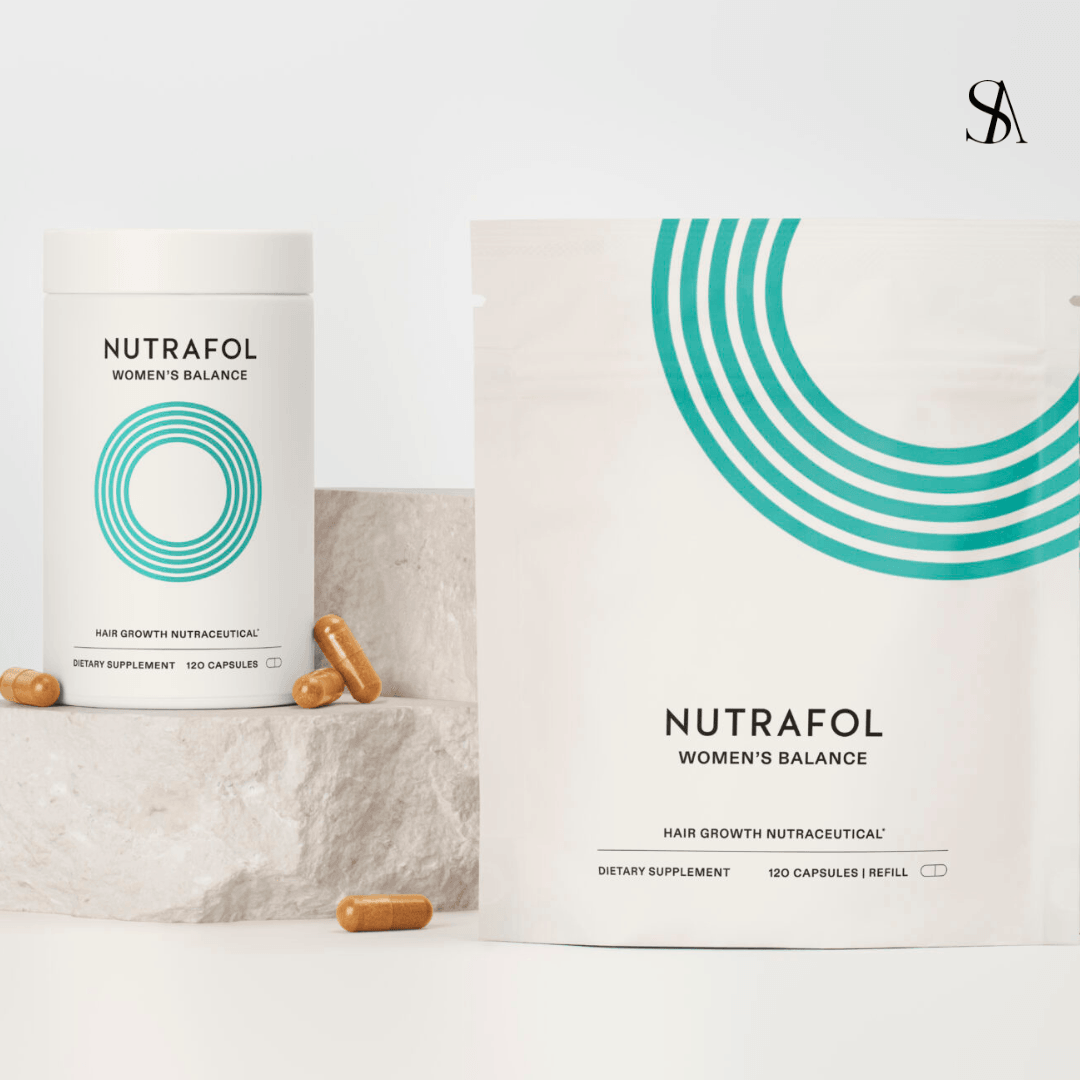
I’ve been particularly interested in formulations like Nutrafol’s Women’s Balance — not because of marketing claims, but because the ingredient profile reflects an understanding of adaptive support. This isn’t about isolated nutrients; it’s about ingredients that work together to address multiple points in the stress-hormone cascade while simultaneously opening alternative signaling routes.
Ashwagandha, a botanical shown to lower cortisol levels, helps relieve stress to reduce hair shedding — supporting scalp and hair health during perimenopause. When combined with adaptogenic ingredients like maca, it supports hormone balance during this transitional stage.
Saw palmetto addresses DHT, which becomes more prominent as the estrogen-to-androgen ratio shifts. Curcumin, extracted from turmeric for its antioxidant properties, helps fight free radicals to support cellular health. Tocotrienols, a concentrated form of vitamin E, provide super antioxidant activities against environmental stress to support hair density.
The elegance lies in how these compounds work together to support hormone balance rather than simply addressing nutrient gaps. Each ingredient contributes to the body’s natural ability to support healthy hair function. Together, they promote a whole-body approach to address hair thinning.
This approach recognizes the importance of supporting the body’s adaptive hair processes during menopause.
Menopause as a Biological Sabbatical, and Training Period
I want to offer a reframe that’s helped me approach this transition differently:
Think of menopause as your body’s biological sabbatical paired with an intensive training period. For decades, your physiology prioritized reproductive capability, which required enormous resources. Now, that burden lifts. Energy previously devoted to maintaining fertility becomes available for repair, renewal, and resilience.
But like any sabbatical that includes skill development, this period requires intentional design and active learning. Your body is pausing one program and preparing to launch another. This is an ideal window for mitochondrial renewal, protein turnover optimization, and circadian recalibration (if you support the adaptive process).
The bodies that thrive through menopause aren’t necessarily the ones with the best genetics or the highest hormone levels to begin with. They’re the ones that successfully shift from optimization to adaptation. They learn metabolic flexibility.
Nutritional support matters more now than perhaps any time since adolescence, but not just as supplementation. As adaptive training. You’re teaching your cells new patterns of nutrient utilization. So does sleep architecture, stress modulation, and what I call hormetic stress — brief exposures to heat, cold, or fasting that trigger cellular repair mechanisms while also building adaptive capacity.
These mild stressors reignite signaling pathways that may have gone dormant, but more importantly, they train cells to respond to change rather than resist it. When combined with nutraceutical support, they accelerate the shift from brittle optimization to resilient adaptation.
We’re entering an era of pro-longevity hair care, where follicular biology becomes a biomarker for systemic aging and, crucially, for adaptive capacity. The health of your hair isn’t separate from your metabolic health, your inflammatory status, or your cellular resilience. It’s a visible manifestation of how successfully your body is learning to thrive in its new metabolic reality.
The Future of Female Longevity Medicine
Looking forward, I believe the next decade will see a profound convergence of dermatology, endocrinology, and geroscience (the scientific study of aging mechanisms).
We may soon use scalp health metrics (hair density, tensile strength, growth velocity) as accessible biomarkers not just for biological aging but for adaptive capacity. These measurements are non-invasive, longitudinal, and sensitive to interventions. They could tell us not just how old your biology is, but how well it’s learning to function under changing conditions.
I envision formulations that adapt to individual hormone metabolite profiles, creating truly personalized “hairspan medicine.” Imagine testing not just vitamin levels but estrogen metabolites, cortisol patterns, and inflammatory markers, then receiving a customized blend that addresses your specific adaptive needs — the exact pathways your cells are struggling to reroute.
Also, just to address all the skeptics: this isn’t science fiction. The technology exists. We’re simply waiting for clinical frameworks to catch up with biological understanding.
Beyond the Surface
I recently discussed these concepts in depth with Dr. Isabelle Raymond, Senior Vice President, Global and Clinical Affairs at Nutrafol, on the Skin Anarchy podcast, exploring how hormonal shifts reshape not just hair but our entire approach to aging. If you’re interested in the deeper science, I’d encourage you to listen as we go into detail about mechanisms I could only touch on here.
But the core message is this: Menopause isn’t the end of youth. It’s the beginning of informed regeneration, where you support your body’s transition from optimization to adaptation.
For too long, we’ve treated this transition as something to endure, manage, or mask. But what if we approached it as an opportunity, a chance to rebuild our biology with intention, teaching our cells new patterns of resilience supported by compounds that facilitate learning rather than simply replacing what’s lost?
Your hair will tell you whether you’re succeeding. Not because hair is vain or superficial, but because it’s honest. Hair is the barometer of internal equilibrium. It reflects nutrient status, hormonal balance, inflammatory load, and stress resilience with remarkable fidelity. But perhaps most importantly, it reflects adaptive capacity (how well your cells are learning to thrive under new conditions).
When you see changes (and you will) view them as data, not defeat. Your body is communicating. The question is whether you’re equipped to listen, respond, and support the adaptive journey it’s undertaking.
Longevity begins when biology learns to live without estrogen. But thriving in that new reality requires bio-literacy, proactive support, and a willingness to see this transition for what it truly is: not an ending, but a profound metabolic evolution that demands, and deserves, adaptive intelligence.
Estrogen was never just a reproductive hormone, it was your antioxidant network’s silent architect. When it withdraws, we must learn to build those networks ourselves — not by recreating the old blueprint, but by teaching our cells to design new ones.
*This article is sponsored content in partnership with Nutrafol. We maintain editorial integrity and independence in all sponsored content.*